
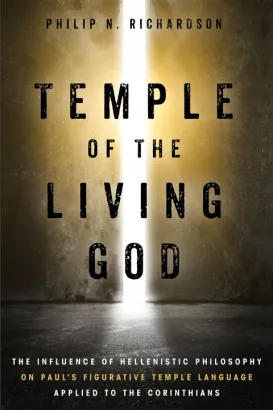
Temple of the Living God
The Influence of Hellenistic Philosophy on Paul’s Figurative Temple Language Applied to the Corinthians
Bemærk venligst, at den normale 14 dages fortrydelsesret ophører ved modtagelse af adgang til e-bogen.
Produkt beskrivelse
When writing to the Corinthians, the Apostle Paul used figurative temple language repeatedly to shape the identity of his audience ("e;Temple of God,"e; "e;Temple of the Holy Spirit,"e; and "e;Temple of the Living God"e;). While other scholars have identified the place of the Jerusalem temple in Paul's thinking or the impact of temples in the life of Corinth, there has been no comprehensive study of the way that figurative temple language in philosophy could have influenced the Corinthians' worldview. Hellenistic philosophy was pervasive in the first century and provided theological guidance for faith and practice to Paul's Gentile audience before their conversion. Philip N. Richardson provides a comprehensive survey of figurative temple language in Hellenistic philosophy, shedding light on the way that the kinds of philosophical thought known in cities like Corinth may have influenced the Corinthians to think about figurative temple language. This study throws into sharp relief the similarities and differences between Paul's use of temple language and that of philosophy, and illuminates Paul's setting of this language in the wider framework of 1-2 Corinthians and his purpose for its use in the argument of the letters.
Oplysninger om tilgængelighed
Detaljer
- ISBN13 9781532641695
- Sider 330
- Udgivet 2018
- Forlag Pickwick Publications
- Format Elektronisk medie
- Sprog Engelsk